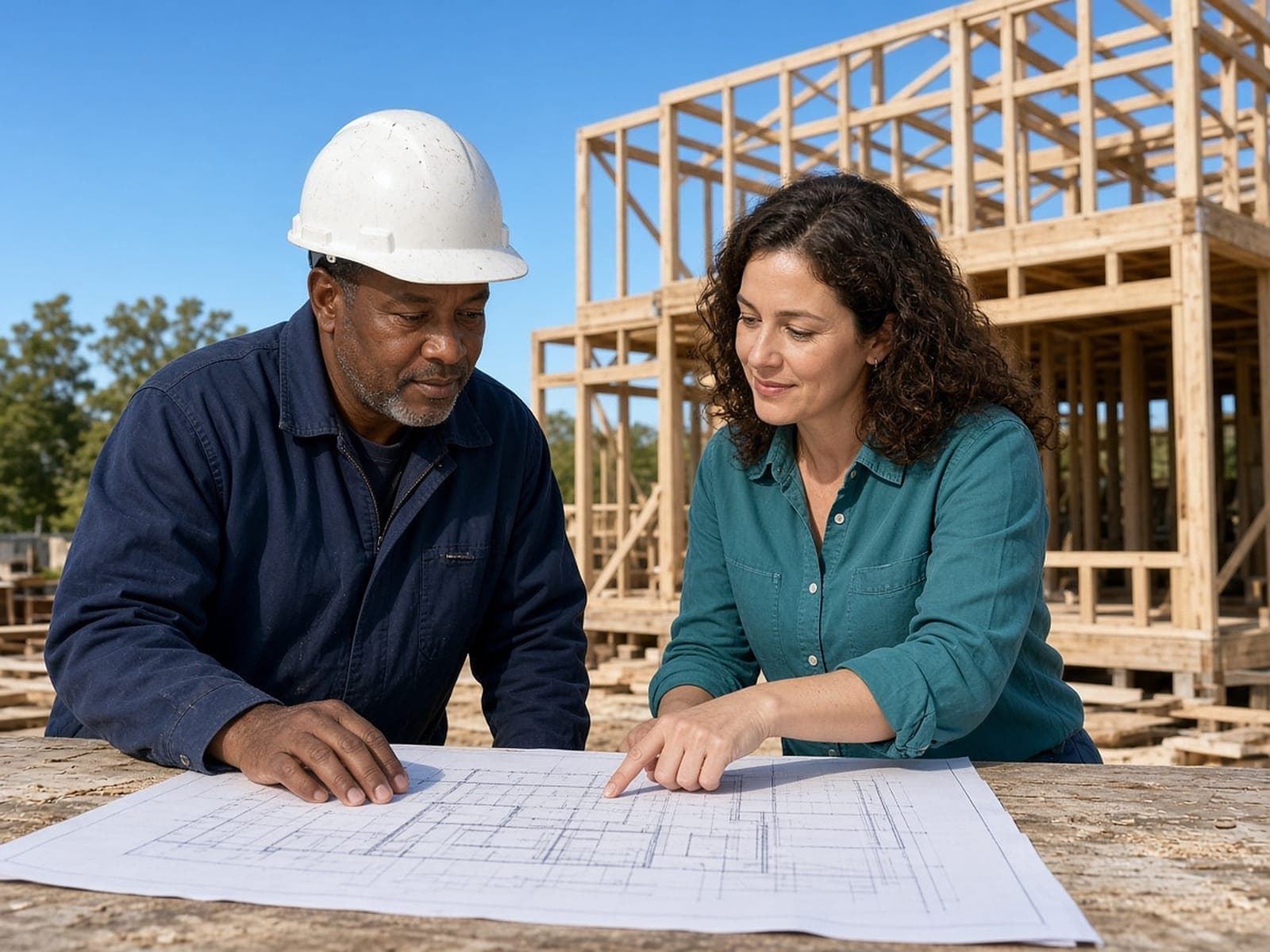
What a construction loan is
A commercial construction loan funds a building project for a business: a new building, an addition to an existing one, a major renovation, or a tenant build-out that turns raw space into a working shop, office, clinic or restaurant.
It differs from most business loans in two ways. First, the money is released in stages as the work progresses. Second, the lender is lending against something that does not exist yet, so it looks closely at the plans, the budget, the contractor and the expected value of the finished property, often called the “as-completed” value in an appraisal.
Construction loans are usually short-term. They are meant to carry the project through to completion, at which point longer-term financing takes over.
How draws and inspections work
Before closing, the lender reviews the project and agrees a draw schedule tied to stages of work, such as site preparation, foundation, framing, systems and finishes. As each stage is completed, the borrower or contractor requests a draw.
- The contractor completes a phase of work and submits a draw request, usually with invoices and lien waivers from subcontractors and suppliers.
- The lender sends an inspector, or reviews an inspection report, to confirm the work was done as described.
- The lender releases the funds for that phase, often directly to the contractor or through a title or escrow company.
- The process repeats until the project is complete.
Because funds go out over time, interest is often charged only on the amount drawn so far, not the full loan amount. Some loans also include an interest reserve, money set aside within the loan to cover interest payments during construction.
Bank regulators expect lenders to manage construction draws carefully. The OCC’s Comptroller’s Handbook on commercial real estate lending (opens in a new tab) describes how banks are expected to oversee construction lending, which gives a sense of what a lender will look for.
Construction-only and construction-to-permanent loans
A construction-only loan covers the building phase. When the project is done, the borrower needs a separate permanent loan, sometimes called a take-out loan, to repay it. That means two applications, two closings, and the risk that permanent financing terms change while the building goes up.
A construction-to-permanent loan combines both phases. It converts to a long-term loan when construction is complete, which can mean one closing and less uncertainty, but the conversion terms need careful reading.
For owner-occupied property, the SBA says 504 loans (opens in a new tab) and 7(a) loans (opens in a new tab) can finance construction for eligible small businesses. SBA program rules, including occupancy and eligibility requirements, change over time, so check the SBA pages and ask an SBA lender for current details.
What lenders often ask for
- Architectural plans, specifications and building permits.
- A detailed budget, including a contingency for unexpected costs, and a construction timeline.
- A licensed and insured general contractor, with the construction contract.
- An appraisal showing the expected as-completed value.
- A down payment or equity in the project, which may include land already owned.
- Business financial statements and tax returns.
- Personal credit, business credit, or both, and often a personal guaranty.
Surety bonds for contractors
Some projects require the contractor to provide a surety bond, which protects the project owner if the contractor does not perform. The SBA runs a surety bond program (opens in a new tab) for small contractors.
Our guide to getting loan-ready covers the financial documents most lenders ask for.
Costs and terms to compare
- The interest rate, and whether it is fixed or variable during construction (variable is common).
- Origination fees, plus draw or inspection fees charged for each draw.
- Appraisal, title and legal costs.
- Any interest reserve and how it is funded.
- The required contingency budget.
- Conversion terms on a construction-to-permanent loan, or the take-out loan terms.
- Prepayment terms on both phases.
Because many of these costs come at different times, it helps to build one spreadsheet that shows every cost from application through the first years of the permanent loan.
Possible benefits and drawbacks
Pros
- Interest is often charged only on funds drawn, not the full amount.
- An owner-occupied building can be financed for the long term.
- SBA options exist for eligible small businesses.
- The draw process adds outside checks on the contractor’s progress.
Cons
- More paperwork, inspections and oversight than most loans.
- Cost overruns and delays can require more cash from the owner.
- Rates are often variable during construction.
- The property is collateral and can be lost if the loan is not repaid.
Red flags
- A lender that wants large upfront fees before issuing a commitment or approval letter.
- No inspection or draw process, with all funds released at once.
- A contractor asking for most of the money before work starts.
- Promises of certain approval for any construction project.
- A budget with no contingency, or a timeline that leaves no room for weather, permits or supply delays.
Free counseling
SBA resource partners, including SCORE, Small Business Development Centers, Women’s Business Centers and Veterans Business Outreach Centers, offer free or low-cost counseling and can help you review a project budget and financing plan.
Find one through the SBA’s resource partners page (opens in a new tab).
Questions to ask a lender
- How are draws scheduled, who inspects the work, and how long does a draw take?
- What happens if the project runs over budget or past the planned completion date?
- Is this a construction-only loan or construction-to-permanent, and what are the conversion terms?
- Is the rate fixed or variable during construction and after?
- How much contingency do you require, and can unused contingency be applied to the loan?
- What fees are charged at closing and at each draw?
The SBA’s loans overview (opens in a new tab) explains its programs. You may also want to read about SBA loans, equipment financing for fixtures and machinery, and maturity refinance for property debt coming due later.
Frequently asked questions
How do construction draws work?
The lender releases money in stages as each phase of work is completed and inspected. Interest is often charged only on the amount drawn so far.
Can SBA loans be used to build?
The SBA says 504 and 7(a) loans can finance owner-occupied construction for eligible small businesses. Program rules change, so check the SBA website and ask an SBA lender for current requirements.
What is a construction-to-permanent loan?
It is a single loan that funds construction and then converts to a long-term loan once the building is finished. It avoids a separate take-out loan, but the conversion terms need careful review.
How much of a down payment does a commercial construction loan need?
It varies by lender, program and project. Most lenders expect the owner to put in some equity, which may include land already owned.
What happens if construction runs over budget?
The owner usually has to cover the gap, from a contingency budget, more equity or added financing if the lender agrees. Asking how overruns are handled before closing is important.