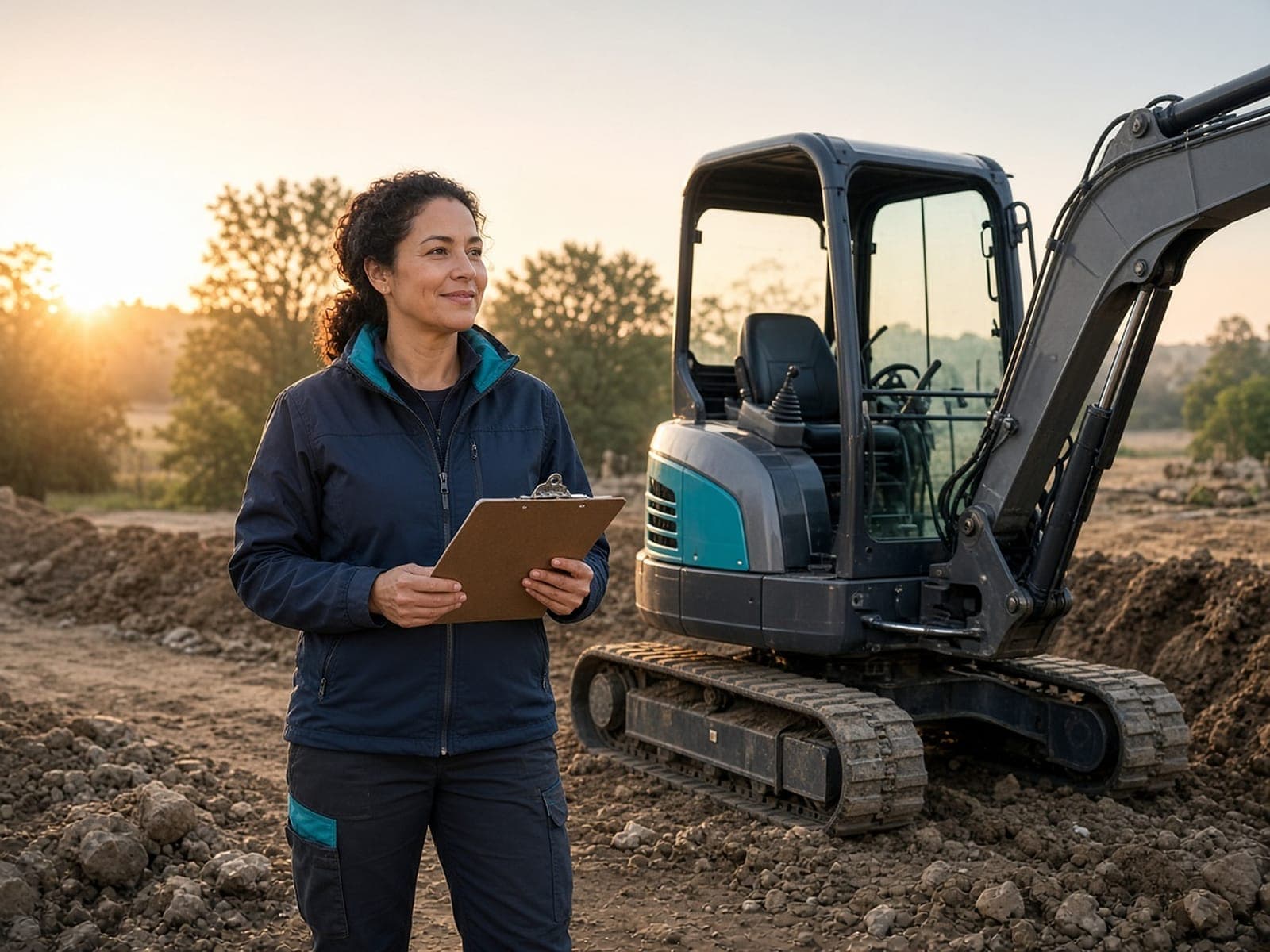
What equipment financing is
Equipment financing is a broad name for ways to pay over time for the physical things a business runs on. That can mean an excavator for a construction company, ovens and refrigeration for a restaurant kitchen, imaging gear for a dental or medical practice, a delivery truck, a manufacturing machine, or computers and servers for an office.
There are two main structures. An equipment loan lends money to buy the equipment, and the business owns it from the start, subject to the lender’s lien. An equipment lease lets the business use the equipment for a set period in exchange for regular payments, and ownership depends on the lease’s end-of-term terms.
Because the equipment has resale value, it usually acts as collateral. That is why equipment financing can be easier to understand than some unsecured business credit: the lender’s main protection is the asset being financed. It also means the lender can take the asset back if the payments stop.
How equipment loans and leases work
With an equipment loan, a lender pays the seller and the business repays the lender in fixed payments over a term that is often tied to the equipment’s useful life. The lender usually files a UCC financing statement, a public notice that it has a security interest in the equipment, and releases it once the loan is paid off.
With a lease, the business makes payments for the right to use the equipment. Lease pricing is sometimes described with a money factor rather than an interest rate, which makes direct comparison with a loan harder. At the end of the lease there are usually three paths: return the equipment, renew the lease, or buy it.
The buyout option matters most. A fair market value (FMV) lease lets the business buy the equipment at the end for what it is worth at that time, which is often unknown when the lease is signed. A nominal buyout lease, often called a “one-dollar buyout,” is built so the business ends up owning the equipment for a token amount, which makes it work much like a loan.
| Measure | Equipment loan | Equipment lease |
|---|---|---|
| Ownership | The business owns the equipment, subject to the lender’s lien | The lessor owns it during the lease; the end-of-term option decides what happens next |
| How cost is shown | Interest rate or APR, plus any fees | Payment amount, sometimes a money factor, plus fees and the buyout price |
| End of term | Lien is released once paid in full | Return, renew or buy, depending on the lease |
| Upgrades | Selling or trading in is up to the owner | Returning and leasing newer equipment can be simpler |
SBA programs can also be part of the picture. The SBA says its 504 loans (opens in a new tab) and 7(a) loans (opens in a new tab) can be used to finance major equipment, under program rules that change over time, so check the SBA pages for current details.
Common uses
- Construction and heavy equipment, such as loaders, excavators and lifts.
- Restaurant kitchens: ranges, ovens, refrigeration, dishwashing and point-of-sale hardware.
- Medical, dental and veterinary equipment.
- Trucks, vans and other work vehicles.
- Manufacturing and fabrication machines.
- Technology: computers, servers, phones and networking gear.
Both new and used equipment can be financed. Used equipment may cost less up front, but some lenders look harder at its age, condition and remaining useful life, and warranty coverage may be shorter or absent.
What lenders often ask for
Requirements vary widely by lender and by the type of equipment. Many lenders and lessors ask for some or all of the following:
- A quote or invoice from the equipment seller describing the equipment and its price.
- How long the business has been operating, and its revenue.
- Personal credit, business credit, or both.
- Bank statements and, for larger amounts, financial statements or tax returns.
- A down payment, in some cases.
- Proof of insurance on the equipment.
Startups can sometimes finance equipment, since the asset itself secures the deal, but newer businesses may see more requests for a down payment, a personal guaranty or stronger personal credit. If you are getting your paperwork together, our guide to getting loan-ready walks through the common documents.
Costs and terms to compare
Two offers with similar monthly payments can have very different total costs. It helps to line up the same items for every offer:
- The interest rate or APR on a loan, or the money factor and total of payments on a lease.
- Any down payment.
- Documentation, origination or other upfront fees.
- The end-of-lease options and the buyout price, or how the buyout price will be set.
- Prepayment terms: whether paying early saves interest or triggers a penalty.
- Insurance requirements and who pays for them.
- The total amount you would pay over the full term, compared with the purchase price.
Tax treatment, such as depreciation, can differ between buying and leasing. The rules are detailed and change, so it can help to read the IRS tax guide for small business (opens in a new tab) and talk with a tax professional before deciding how a purchase is structured. BizKindly does not give tax advice.
Possible benefits and drawbacks
Pros
- The equipment usually serves as its own collateral.
- Spreading the cost over time can preserve cash for operations.
- Leases can make it easier to upgrade equipment that ages quickly.
- Payments can be planned, since many loans have fixed payments.
Cons
- The total cost of financing can exceed the purchase price.
- Equipment can become outdated before it is paid off.
- Some agreements include a blanket lien on all business assets.
- Lease buyout terms vary and can be hard to compare.
Red flags
- A blanket lien on every business asset to finance a single machine.
- An unclear or unstated buyout price at the end of a lease.
- Vendor financing offered as the only option, with no chance to compare other offers.
- Promises of “no documents” and certain approval regardless of the business’s situation.
- Pressure to sign before you have seen the full agreement and the total cost.
Get help reviewing an agreement
SBA resource partners, including SCORE, Small Business Development Centers, Women’s Business Centers and Veterans Business Outreach Centers, offer free or low-cost counseling and can help you read through financing terms.
Find a counselor near you through the SBA’s resource partners page (opens in a new tab).
Questions to ask a lender or lessor
- Is the lien only on this equipment, or on other business assets too?
- Is this a fair market value lease or a nominal buyout lease, and how is the buyout price set?
- Is there a prepayment penalty, or a discount for paying early?
- Who is responsible for insuring the equipment, and what coverage is required?
- What happens if the equipment breaks while it is under warranty, and do payments continue?
- What is the total amount I will pay over the full term, including every fee?
Lenders and lessors range from banks and credit unions to online lenders, equipment vendors and SBA lenders. The Federal Reserve’s Small Business Credit Survey (opens in a new tab) reports on where small businesses seek financing, and the SBA’s loans overview (opens in a new tab) explains its programs. You may also want to read about business lines of credit and SBA loans for comparison.
Frequently asked questions
Is it better to lease or buy equipment?
It depends on how long the equipment stays useful, how fast it becomes outdated, the total cost of each option and how the business wants to handle ownership. Comparing the full cost of a loan with the full cost of a lease, including any buyout, makes the trade-off clearer.
Can a startup finance equipment?
Some lenders and lessors work with newer businesses because the equipment secures the deal. Newer businesses may be asked for a down payment, a personal guaranty or stronger personal credit.
Can used equipment be financed?
Yes, many lenders finance used equipment, though some look closely at its age, condition and remaining useful life. Warranty coverage on used equipment may be limited.
What is a one-dollar buyout lease?
It is a lease built so the business can buy the equipment for a token amount at the end of the term. Because ownership is expected to transfer, it works much like a loan.
What is a UCC lien on equipment?
It is a public filing that tells others a lender has a security interest in the equipment. It is usually released once the debt is paid in full.